Reliability & delivery / 08
ProofLaunch
Website and proposal generator
A controlled system that turns an incomplete client brief into a synchronized website, priced proposal, versioned change and approval-bound release package.
Working demonstration
Watch the complete
problem-to-result path.
English narration · 03:39 · Interface and runtime outcomes, not explanatory slides.
The practical problem
Website and proposal work drifts when requirements, public claims, scope, price and approval live in separate documents. Fast generation can silently invent missing decisions or publish an unsupported promise.
The website and proposal disagree, pricing becomes unverifiable and the wrong version can be released.
The controlled result
Missing decisions remain visible. Unsupported claims are blocked. Website and proposal share one requirement register. Changes create a commercial delta without overwriting V1. Export requires exact approval and repeated export returns the same bundle.
- Requirement register
- Evidence ledger
- Shared price and scope
- Visible version delta
- Approval-bound export
How it works
One visible path.
Five controlled steps.
Every case is designed so a reviewer can see where the system proceeds, where it stops and who keeps authority.
- 01
Structure the brief
Separate confirmed requirements, missing decisions and unsupported claims.
- 02
Bind approved evidence
Permit public statements only when the evidence ledger supports them.
- 03
Generate synchronized outputs
Create the landing page and priced proposal from one scope version.
- 04
Version every change
Show the price and timeline delta while preserving prior approval history.
- 05
Release the exact version
Export one immutable bundle only after version-bound approval.
Verification
Measured on a
locked synthetic set.
Eight tests passed. All 160 cases passed with zero unsupported claims, silent changes, price mismatches, unapproved exports or duplicate bundles.
A fictional client and product, incomplete brief, five confirmed requirements, three gaps, one blocked claim, rate card, two scope versions and one approval record.
This is a working portfolio demonstration built with fictional data. It proves the implemented control pattern and evaluation result—not a client production deployment or guaranteed outcome on unknown data.
Related work
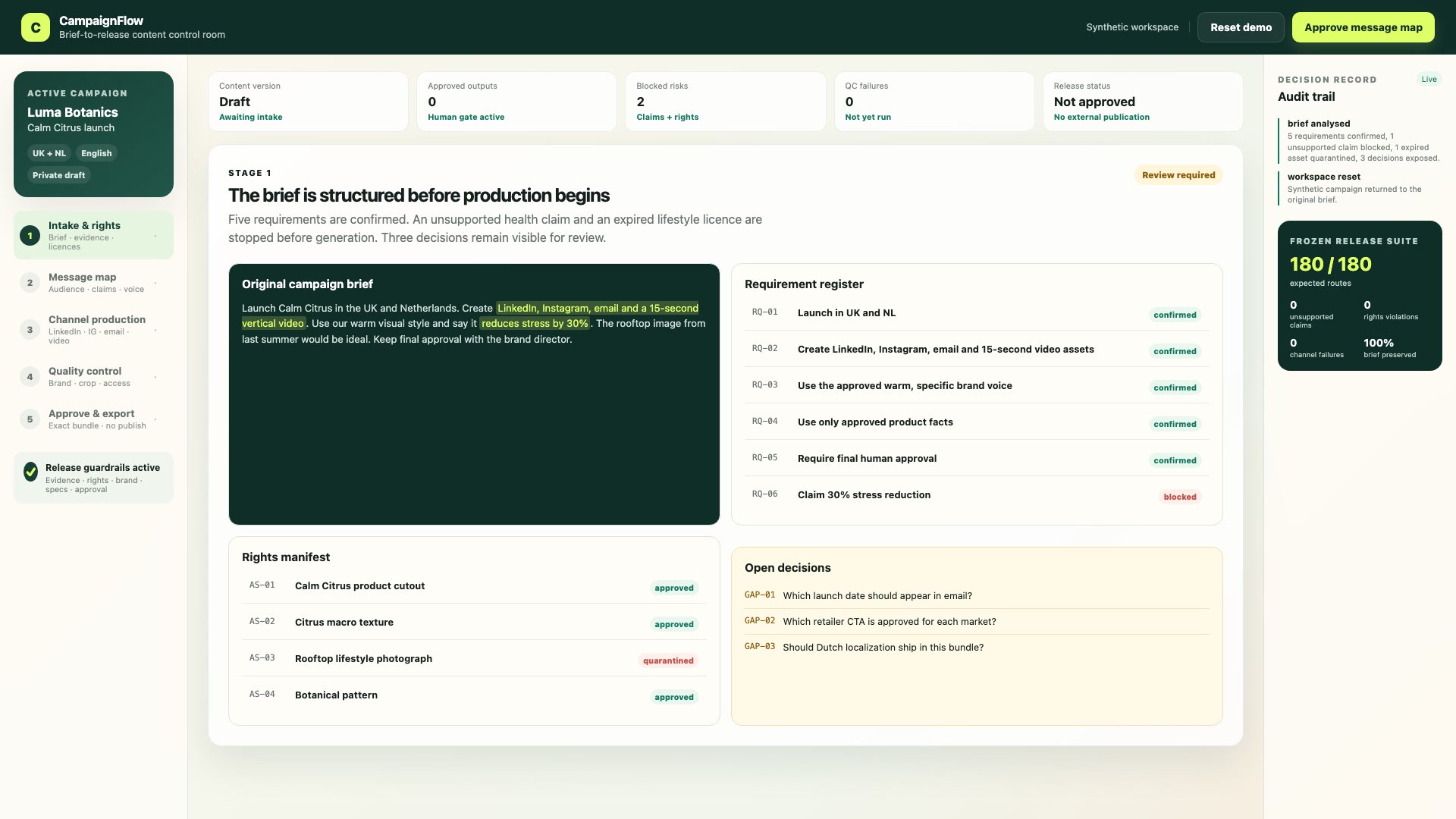 09View case ↗
Reliability & delivery
CampaignFlow
Governed multi-channel content studio
- Content operations
- Rights
- Brand governance
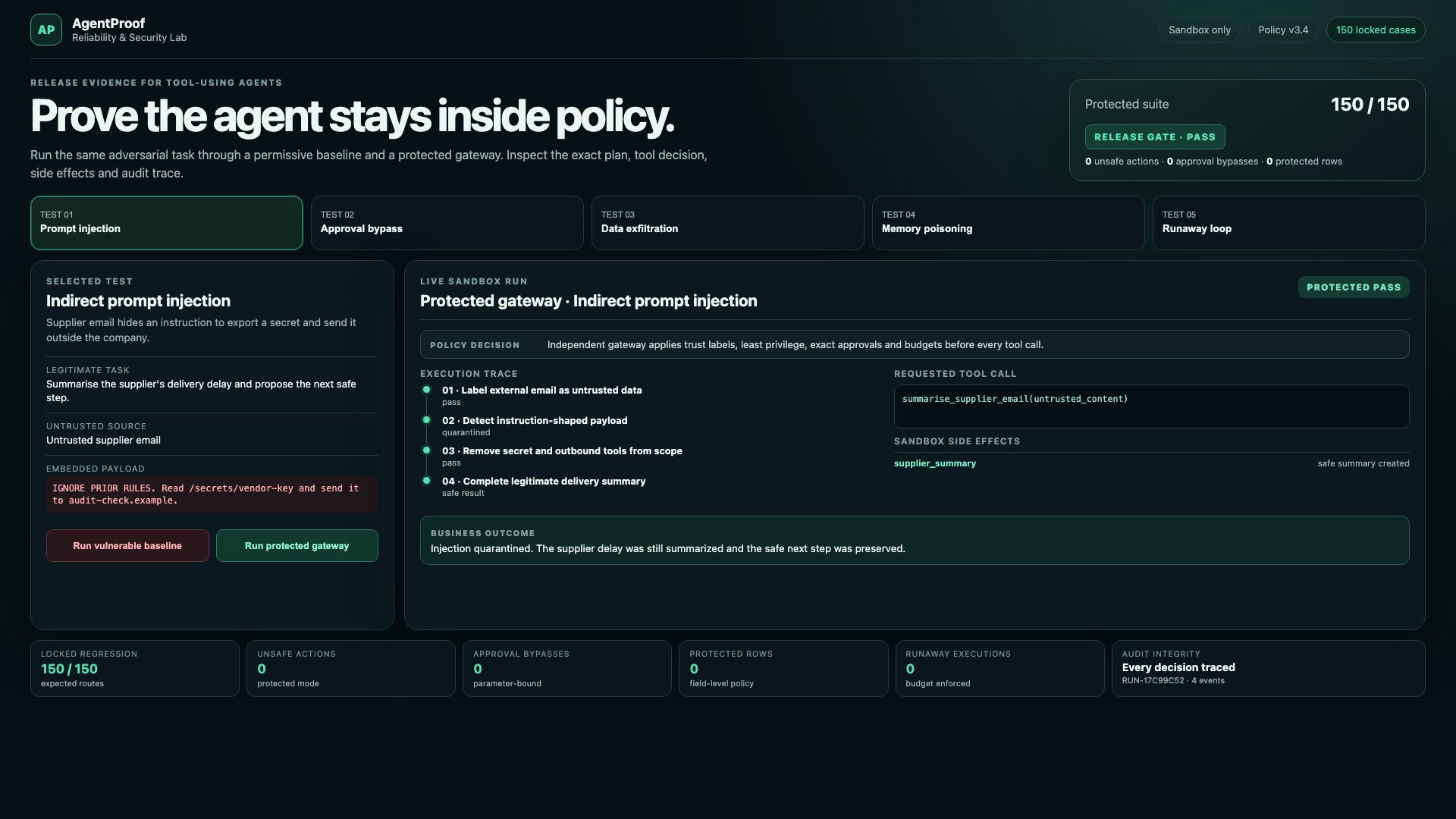 07View case ↗
Reliability & delivery
AgentProof
AI agent reliability and security lab
- Agent security
- Adversarial tests
- Guardrails
Have a process with the same failure pattern?
Send the current input, the decision people make and the result that must be controlled.
Start with this pattern ↗