Operations & analytics / 04
ProcurePilot
Multi-step procurement agent
A procurement agent that moves a request through missing-data checks, vendor compliance, budget rules, sequential approvals and duplicate-safe PO creation.
Working demonstration
Watch the complete
problem-to-result path.
English narration · 03:22 · Interface and runtime outcomes, not explanatory slides.
The practical problem
Procurement work crosses forms, policies, budgets, vendor status and multiple approvers. A generic agent can appear productive while bypassing a required decision or creating a PO against an invalid supplier.
An approval bypass or unsafe purchase order becomes a real financial commitment.
The controlled result
Straight-through requests create one synthetic PO. Incomplete requests pause and resume. Two-person approval remains sequential. Expired vendor compliance creates remediation instead of a PO. Rejected budget exceptions remain closed.
- Required-field stop/resume
- Vendor compliance gate
- Budget routing
- Sequential approval
- Idempotent PO creation
How it works
One visible path.
Five controlled steps.
Every case is designed so a reviewer can see where the system proceeds, where it stops and who keeps authority.
- 01
Validate the request
Check required fields, currency, cost center and delivery date.
- 02
Check vendor status
Confirm approval and compliance before any commitment.
- 03
Apply budget policy
Evaluate thresholds and choose the correct approval plan.
- 04
Collect exact decisions
Bind each approval to the request, role and stage.
- 05
Create once or remediate
Issue one PO only after all controls pass; otherwise create a visible task.
Verification
Measured on a
locked synthetic set.
Five engine tests passed. All 72 frozen cases matched their route and approval plan with 100% audit completeness, zero unsafe POs and zero approval bypasses.
Twenty fictional vendors, five budgets in five currencies, four procurement policies and 72 evaluation cases. No real purchases or supplier details.
This is a working portfolio demonstration built with fictional data. It proves the implemented control pattern and evaluation result—not a client production deployment or guaranteed outcome on unknown data.
Related work
 L05View case ↗
Operations & analytics
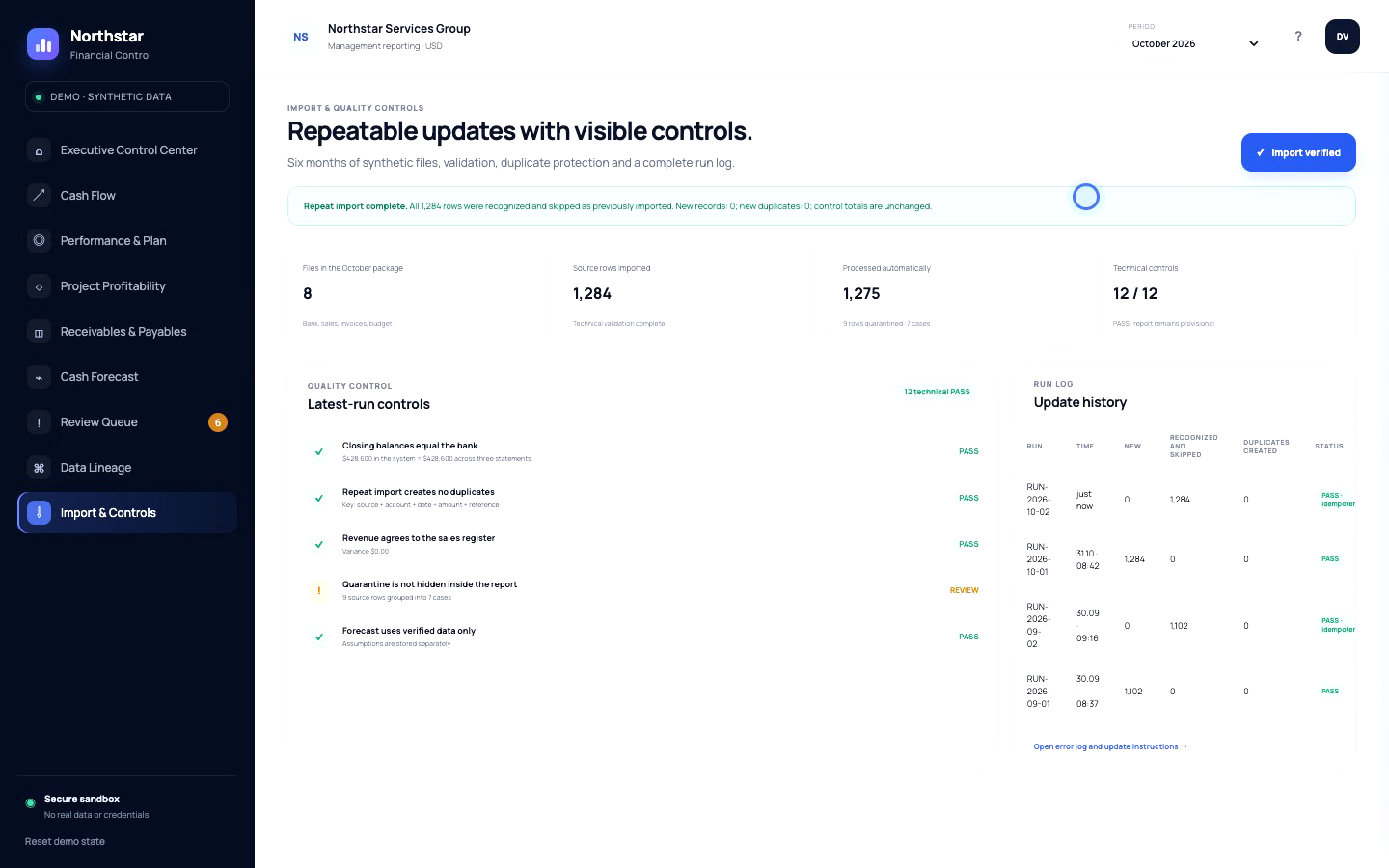
Data Cleanup, Migration & Validation
Reconciled and duplicate-safe migration
- Data cleanup
- Migration
- Duplicates
 06View case ↗
Have a process with the same failure pattern?
Send the current input, the decision people make and the result that must be controlled.
Start with this pattern ↗